Smart Glass Technologies Explained: PDLC, DD-PDLC, PNLC, SPD & Electrochromic for Modern Architecture and Smart Homes
Smart Glass Technologies Explained: PDLC, DD-PDLC, PNLC, SPD & Electrochromic for Modern Architecture and Smart Homes
Interior designers, builders, contractors, building renovators, and smart-home integrators face a common challenge: delivering privacy, light control, energy efficiency, and sleek aesthetics without traditional blinds, curtains, or heavy mechanical systems. Smart glass technologies solve this by allowing glass to change optical properties on demand—switching from clear to private, tinted, or dimmed with electricity.
This guide covers the five main active smart glass technologies: PDLC, DD-PDLC, PNLC, SPD, and Electrochromic. Understanding their differences helps specify the right solution for offices, residences, healthcare spaces, retail, and integrated smart buildings. Many of these are available as factory-laminated smart glass or as retrofit films that transform existing glass.
1. PDLC (Polymer Dispersed Liquid Crystal)
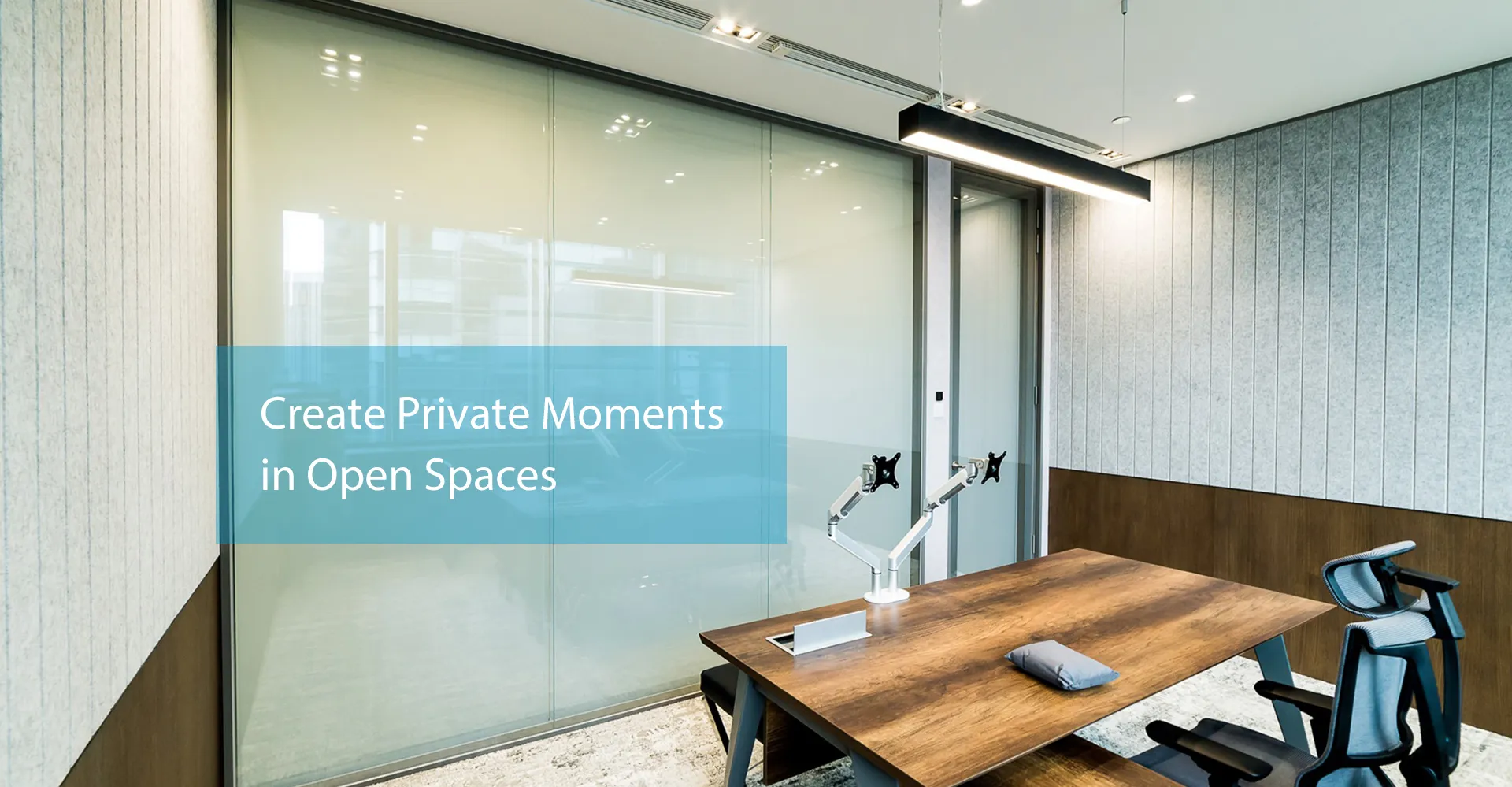
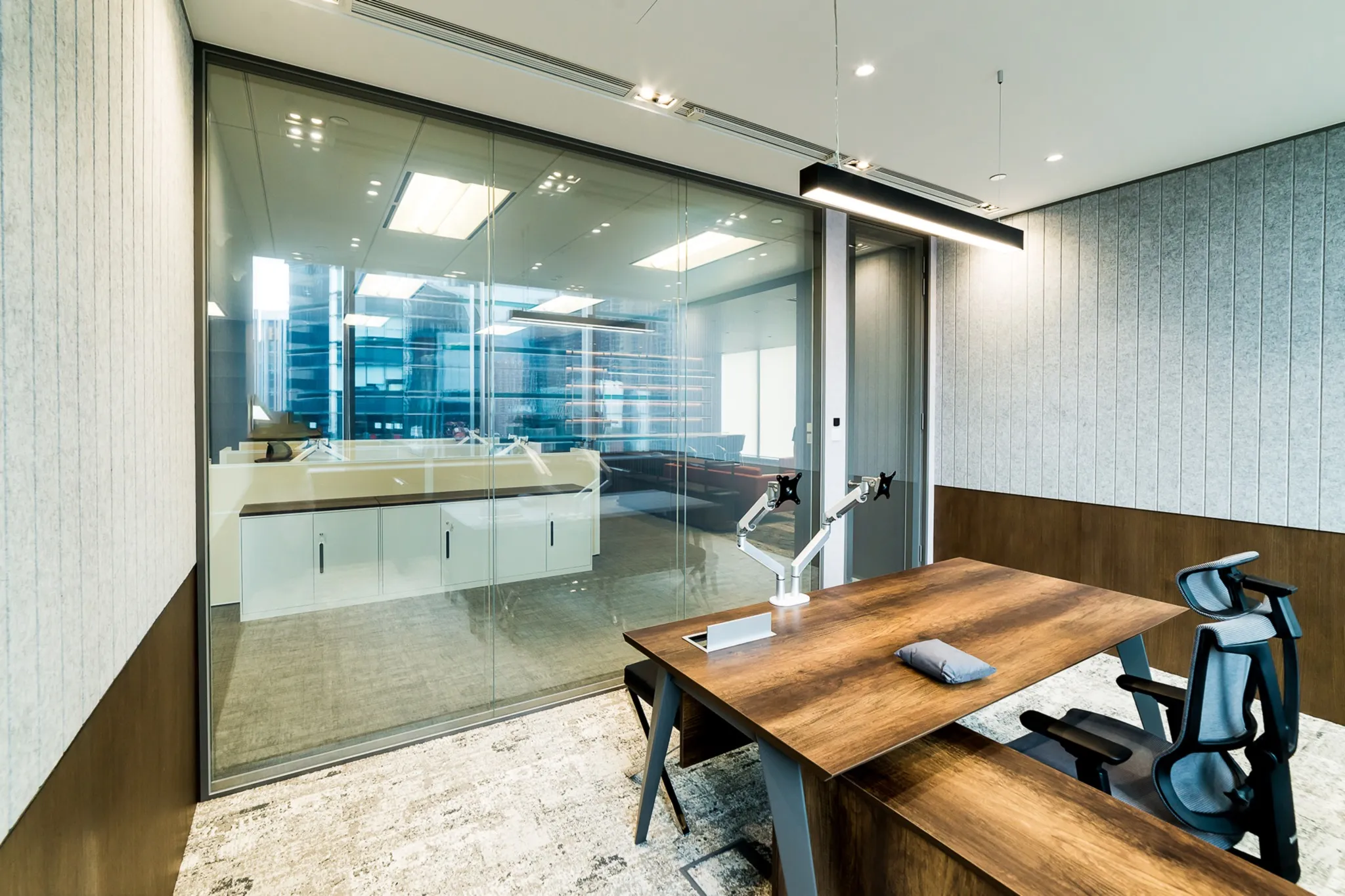
PDLC is the most widely used technology for on-demand privacy. Microscopic liquid crystal droplets are dispersed in a polymer matrix, sandwiched between transparent conductive layers (typically ITO-coated PET film) and laminated into glass or applied as adhesive film.
- How it works: Power off → crystals orient randomly and scatter light → milky/frosted opaque appearance (privacy while still transmitting ambient light). Power on (typically 48–65V AC) → crystals align → clear transparency in milliseconds.
- Key traits: Instant switching (milliseconds), strong visual privacy, UV blocking often >99%, moderate IR reduction, low power consumption (~3–8 W/m² only in the clear state; zero when opaque). Slight residual haze is possible in the clear state depending on quality.
- Best for: Conference rooms, office partitions, bathrooms, medical consultation areas, hotels, and any space needing rapid privacy. Ideal for both new builds (laminated glass) and renovations (self-adhesive film).
- Limitations: Primarily binary (clear/opaque) rather than continuous dimming; less effective for exterior solar heat control without additional coatings.
PDLC remains the go-to choice for interior designers and contractors focused on privacy and clean, minimalist looks.
2. DD-PDLC (Dye-Doped Polymer Dispersed Liquid Crystal)
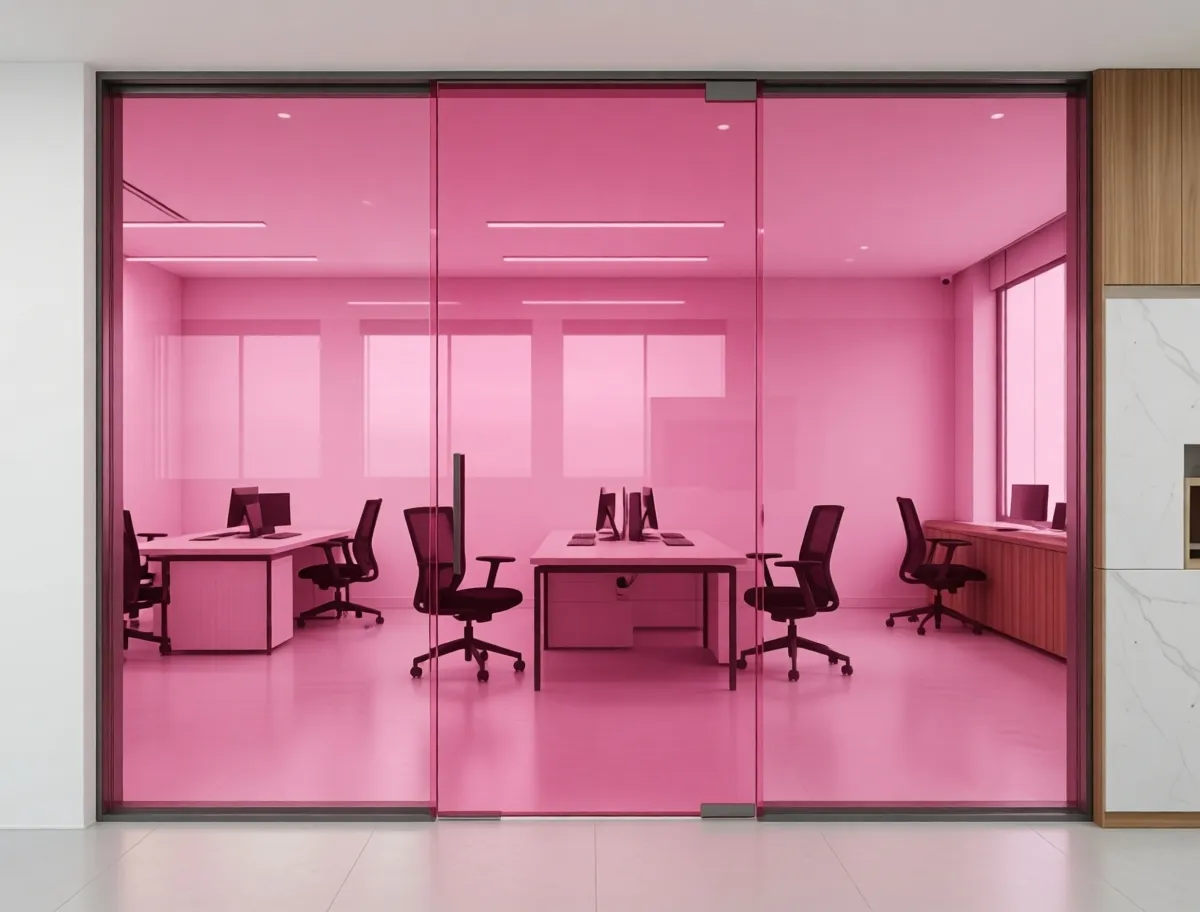
DD-PDLC builds on standard PDLC by incorporating dichroic dyes into the liquid crystal/polymer matrix. This produces tinted or colored privacy states instead of the classic milky white.
- How it works: Same scattering mechanism as PDLC, but dyes add absorption and color. Power off typically yields elegant tinted privacy; power on delivers high clarity with reduced milky haze.
- Key traits: Better aesthetics for designers who dislike plain white frost, improved solar control and light absorption in some formulations, still fast switching, and strong privacy. Available in colors such as gray, blue, and others.
- Best for: Luxury residences, retail storefronts, high-end interiors, projection surfaces, and projects where visual refinement matters as much as function. Excellent retrofit option.
- Limitations: Dye concentration must be carefully balanced to maintain contrast and durability; performance varies by manufacturer formulation.
DD-PDLC bridges privacy needs with sophisticated design language—especially useful for renovators and interior designers targeting premium clients.
3. PNLC (Polymer Network Liquid Crystal) Film – Reverse Mode of PDLC
PNLC (sometimes called reverse PDLC) uses a continuous polymer network rather than discrete droplets. The default state is reversed compared with conventional PDLC.
- How it works: Power off → liquid crystals naturally aligned → highly transparent (often lower haze than standard PDLC). Power on → crystals scatter → opaque/privacy state. Switching remains very fast (milliseconds to under a second).
- Key traits: Clarity by default (ideal when natural light and views are prioritized most of the time), excellent optical purity in the clear state, lower power in some configurations, available in white or colored opaque states.
- Best for: Storefronts, open-plan offices, residential living areas, and any application where the glass should stay clear without continuous power, switching to private only when needed. Strong fit for smart-home systems that default to open views.
- Limitations: Generally higher cost than standard PDLC; privacy level can be slightly less diffuse than classic milky PDLC in some formulations.
PNLC is increasingly specified by architects and integrators who want energy-efficient “clear-first” performance.
4. SPD (Suspended Particle Device)
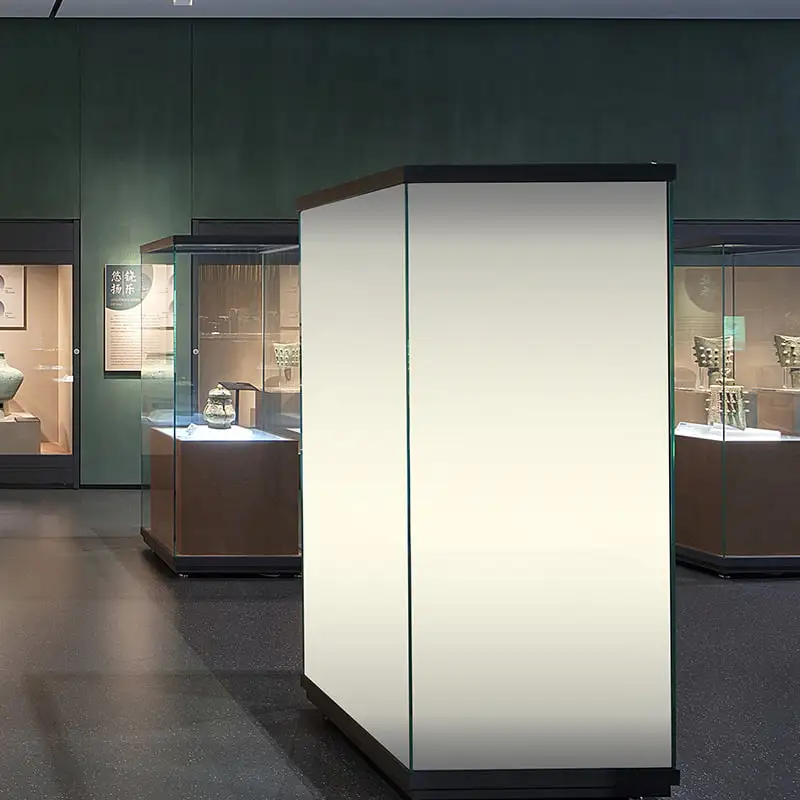
SPD technology uses nanoscale rod-like particles suspended in a fluid film laminated between glass panes.
- How it works: Power off → particles randomly oriented → dark tint (deep blue/black), absorbing most visible light and significant IR. Power on (higher AC voltage) → particles align → progressively clearer. Continuous dimming is possible by varying voltage. Switching takes 1–5 seconds.
- Key traits: Excellent solar control and glare reduction, high UV blocking, substantial IR rejection (heat reduction), tunable tint levels. Not full visual privacy (silhouettes may remain visible in the darkest state).
- Best for: Exterior windows, skylights, façades, automotive, yachts, and high-sun-exposure residential or commercial glazing where heat gain and glare management are priorities. Pairs well with smart building automation.
- Limitations: Continuous power often needed to maintain clear state; higher cost; less suited for pure privacy applications.
SPD excels where energy performance and daylighting comfort matter most to builders and contractors working on high-performance envelopes.
5. Electrochromic Smart Glass
Electrochromic (EC) glass relies on reversible electrochemical reactions, typically involving ion intercalation (e.g., lithium ions into tungsten oxide layers) within multi-layer coatings deposited on glass.
- How it works: A low DC voltage pulse moves ions, changing the coating’s absorption and producing a gradual tint (usually blue/gray). Reversing polarity clears it. The tinted or clear state is maintained with little or no ongoing power (bistable behavior). Transition times range from tens of seconds to several minutes, depending on size and temperature.
- Key traits: Outstanding solar heat gain control, very low energy use after switching, wide dynamic range of visible light transmittance, excellent for large façades. No full opacity for privacy.
- Best for: Building envelopes, commercial curtain walls, luxury residences with large glazed areas, and projects targeting energy codes, LEED/BREEAM, or reduced HVAC loads. Integrates well with sensors and building management systems.
- Limitations: Slower response; higher cost; primarily tinting rather than privacy scattering.
Electrochromic technology is the preferred choice for exterior solar management and long-term operational savings.
Quick Comparison for Specifiers
| Technology | Default State (Power Off) | Primary Strength | Switching Speed | Best Application Focus | Relative Cost |
|---|---|---|---|---|---|
| PDLC | Opaque (milky) | Instant privacy | Milliseconds | Interiors, partitions, privacy | Lower |
| DD-PDLC | Tinted privacy | Colored privacy + clarity | Milliseconds | Luxury interiors, design-led | Moderate |
| PNLC | Clear | Clarity by default | Milliseconds | Views + on-demand privacy | Higher |
| SPD | Dark tint | Solar/glare control | 1–5 seconds | Exterior, high-sun areas | Higher |
| Electrochromic | Clear (or holds state) | Energy & heat control | minutes | Façades, large glazing | Highest |
Choosing and Specifying for Real Projects
- Privacy-first interiors (meeting rooms, bathrooms, clinics) → PDLC or DD-PDLC film or glass.
- Open views with occasional privacy → PNLC.
- Exterior heat and glare management → SPD or Electrochromic (often combined with Low-E coatings).
- Renovations and retrofits → Self-adhesive smart films (PDLC/DD-PDLC/PNLC) that install quickly on existing glass with minimal disruption.
- New construction and smart homes → Factory-laminated units integrated with home automation (switches, apps, Alexa/Google, BMS).
- Energy and sustainability goals → Prioritize DD-PDLC or Electrochromic for façades; all technologies block significant UV and can reduce cooling loads when properly specified.
Power requirements are modest, switching is silent and maintenance-free (no moving parts), and most systems last 10+ years with millions of cycles. Films offer flexibility and lower entry cost; laminated glass provides maximum durability for wet areas or exterior use.
Bring Smart Glass into Your Next Project
Whether you are specifying partitions for a commercial fit-out, upgrading a residential renovation, integrating smart controls for a high-end home, or designing energy-efficient façades, the right smart glass technology delivers measurable benefits in comfort, privacy, aesthetics, and operating costs.
Explore high-performance PDLC, DD-PDLC, and PNLC smart films and glass solutions engineered for architects, designers, builders, and integrators at glasstinte.com. Request samples, technical data, or project-specific proposals to see how switchable glass can elevate your next space.
Smart glass is no longer a future concept—it is a practical, proven tool that lets light, privacy, and design work together intelligently.

